 2º 3º 4º
Trinity Grade 3 Exam
Below is a detailed layout of the Trinity exam grade 3 in Spanish. It shows what the children are expected to know.
A continuación se muestra una presentación detallada de la Trinity examen grado 3 en Español. Esto demuestra lo que los niños deben saber.
A) TIPO DE EXAMEN:
El examen consiste en la valoración de una conversación con el examinador.
En esta etapa la conversación se basa principalmente en un intercambio de preguntas y respuestas.
Es importante que el alumno sea capaz de pedir que se le repita cualquier pregunta que no haya oído o entendido, utilizando frases como “Can you repeat that, please?” o simplemente “Sorry?” o “Pardon?”
Duración del examen: 7 minutos
B) CONTENIDOS:
El alumno debe ser capaz de demostrar las siguientes habilidades comunicativas además de utilizar los siguientes aspectos del idioma:
Habilidades comunicativas
- Demostrar la comprensión respondiendo adecuadamente a preguntas y peticiones.
- Utilizar patrones básicos y frases memorizadas para informar sobre situaciones cotidianas
- Intercambiar información personal describiendo situaciones y acciones cotidianas
- Unir grupos de palabras con conectores tales como and, and then.
- Describir rutinas diarias, eventos y el tiempo.
- Expresar la hora y la fecha.
- Expresar habilidad e incapacidad.
- Informar sobre direcciones y ubicación.
- Describir actividades que están realizando personas reales o fotografiadas.
- Descripciones en pasado
- Realizar preguntas sobre la vida cotidiana
Gramática
El alumno debe ser capaz de entender y utilizar:
- El presente continuo.
- Can y can´t
- Preposiciones de movimiento: from, to, up, down, along, across
- Preposiciones de tiempo: on, in, at
- Preposiciones de lugar: near, in front of, behind, opposite
- Pasado simple del verbo to be.
- Números ordinales hasta el 31st ( para las fechas).
- Conectores and , and then.
Vocabulario
El alumno debe ser capaz de entender y de utilizar el vocabulario relacionado con:
- Trabajos
- Lugares del área local
- Lugar de estudio
- Vida familiar
- El tiempo
- El tiempo libre
- La hora y la fecha
- Palabras y estructuras relacionadas con las habilidades comunicativas
Fonología
- Correcta pronunciación del vocabulario de los bloques temáticos.
- Uso adecuado de las contracciones.
- Entonación apropiada.
► Además, el alumno, deberá dominar los contenidos de los niveles anteriores:
Gramática:
- Imperativos para acciones comunes. Por ej.: go, come, show, point, give, touch, stand up
- Partículas interrogativas: what?, how many?, how old?
- Demostrativos: this, that
- Presente simple del verbo to be
- Nombres en singular y plural (ej.: ear/ears, shoe/shoes )
- Adjetivos
- Pronombres personales: I, you, he, she, it, they
- Determinantes: a, the, my, your, his, her
- Partículas interrogativas – who, when
- Preguntas en Presente Continuo
- Determinantes some, any
- Presente Simple
- There is / there are
- Verbo have got
- Preposiciones de lugar in, on, under, between, next to
- Determinantes posesivos
- Pronombres posesivos
- El presente continuo.
- Can y can´t
- Preposiciones de movimiento: from, to, up, down, along, across
- Preposiciones de tiempo: on, in, at
- Preposiciones de lugar: near, in front of, behind, opposite
- Pasado simple del verbo to be.
- Números ordinales hasta el 31st ( para las fechas).
- Conectores and , and then.
Vocabulario
El alumno debe ser capaz de entender y de utilizar el vocabulario relacionado con:
- Habitaciones de la casa
- Objetos de la casa
- Familia y amigos
- Animales domésticos
- Números cardinales hasta el 50
- Posesiones
- Días de la semana y meses del año
- Información personal
- Entorno inmediato (incluyendo objetos de la clase)
- Partes de la cara y del cuerpo
- Animales domésticos, de granja y salvajes
- Colores
- Ropa
- Trabajos
- Lugares
- Lugar de estudio
- Vida familiar
- El tiempo
- El tiempo libre
- La hora y la fecha
Vocabulary
Below is the vocabulary and grammar students must know. It seems a lot but the boys know a lot of it already. In between the vocabulary and grammar there are video examples of the grade 3 Trinity exam.
A continuación se presenta el vocabulario y la gramática los estudiantes deben conocer. Parece mucho, pero los muchachos saben mucho de esto ya. Entre el vocabulario y la gramática hay vídeo ejemplos de la Trinity examen de grado 3.
Jobs
|
contable |
accountant |
|
actor |
Actor |
|
actriz |
Actress |
|
arquitecto |
Architect |
|
artista, pintor |
Artist |
|
panadero |
baker |
|
director de banco |
bank manager |
|
jugador de baloncesto |
Basketball player |
|
jefe |
Boss |
|
conductor de autobús |
Bus driver |
|
hombre de negocios |
businessman |
|
mujer de negocios |
businesswoman |
|
chef |
chef |
|
químico |
Chemist |
|
hombre / mujer de la limpieza |
cleaner |
|
cocinero |
cook |
|
dentista |
dentist |
|
médico |
doctor |
|
conductor |
driver |
|
ingeniero |
Engineer |
|
granjero |
Farmer |
|
actor, actriz |
Film star |
|
bombero |
firefighter |
|
futbolista |
Football player |
|
periodista |
Journalist |
|
abogado |
lawyer |
|
encargado |
manager |
|
mecánico |
Mechanic |
|
modelo |
Model |
|
músico |
musician |
|
enfermero |
Nurse |
|
físico |
Physician |
|
piloto |
pilot |
|
fontanero |
Plumber |
|
policía (hombre) |
Policeman |
|
policía (mujer) |
Policewoman |
|
político |
Politician |
|
cartero |
postman |
|
profesor (de universidad) |
Professor |
|
científico |
Scientist |
|
secretario |
Secretary |
|
dependiente |
shop assistant |
|
cantante |
Singer |
|
deportista (hombre) |
Sportsman |
|
deportista (mujer) |
Sportswoman |
|
estudiante |
Student |
|
cirujano |
surgeon |
|
taxista |
Taxi driver |
|
professor |
Teacher |
|
tenista |
Tennis player |
|
veterinario |
vet |
|
camarero |
Waiter |
|
camarera |
Waitress |
|
Mi padre trabaja en una empresa de Valencia |
My father works for a company in Valencia |
|
Mi madre trabaja en una fábrica |
My mother works in a factory |
|
Mi hermano trabaja como camarero |
My brother works as a waiter |
|
¿A qué te dedicas? |
What do you do? |
|
Soy estudiante |
Soy estudiante |
|
¿A qué se dedica tu madre? |
What does your mother do? |
|
Es profesora |
She’s a teacher |
|
¿Dónde está el enfermero? Está en el hospital. |
Where’s the nurse? He’s at hospital |
|
¿Qué está haciendo el periodista? Está escribiendo en un cuaderno |
What’s the journalist doing? He’s writing on a notebook - |
|
fábrica |
Factory |
|
oficina |
Office |
|
empresa |
Company |
|
taller |
workshop |

Places in the Local Area
|
avenida |
avenue |
|
banco |
bank |
|
bar |
bar |
|
bloque de pisos |
Block of flats |
|
librería |
book shop |
|
puente |
bridge |
|
edificio |
Building |
|
parada de autobús |
bus stop |
|
cafetería |
Café |
|
aparcamiento |
car park |
|
catedral |
cathedral |
|
iglesia |
Church |
|
cine |
cinema |
|
ciudad |
City |
|
tienda de ropa |
Clothes shop |
|
instituto |
College |
|
grandes almacenes |
Department store |
|
discoteca |
Disco |
|
piso |
flat |
|
estadio de fútbol |
Football stadium |
|
feria de atracciones |
Funfair |
|
garaje |
garage |
|
gimnasio |
gym |
|
hospital |
hospital |
|
hotel |
hotel |
|
casa |
house |
|
biblioteca |
library |
|
mercado |
Market |
|
museo |
museum |
|
tienda de música |
music shop |
|
parque |
Park |
|
tienda de animales |
pet shop |
|
gasolinera |
petrol station |
|
correos |
post office |
|
lugar de vacaciones |
Resort |
|
restaurante |
restaurant |
|
río |
River |
|
carretera |
Road |
|
colegio |
School |
|
a orilla del mar |
Seaside |
|
tienda |
Shop |
|
centro commercial |
shopping centre |
|
polideportivo |
Sports centre |
|
plaza |
square |
|
estación |
station |
|
calle |
street |
|
supermercado |
Supermarket |
|
piscina |
Swimming-pool |
|
pista de tennis |
tennis court |
|
teatro |
Theatre |
|
parque temático |
theme park |
|
ayuntamiento |
town hall |
|
pueblo |
Town |
|
tienda de juguetes |
Toy shop |
|
semáforos |
Traffic lights |
|
aldea |
Village |
|
paso de cebra |
Zebra crossing |
|
zoo |
Zoo |
|
¿Dónde vives? Vivo en L´Eliana |
Where do you live? –I live in L´Eliana |
|
Vivo en la calle Luis Montoto, número 3 |
I live at 3, Luis Montoto Street |
|
¿Está cerca? –Está a diez minutos andando |
Is it near? –It's ten minutes walking. |
|
¿Cómo vienes al colegio? |
How do you come to school? |
|
Vengo al colegio en coche |
I come to school by car |
|
¿Dónde está El Corte Inglés? |
Where is El Corte Inglés? |
|
Sigue todo recto, gira a la izquierda… |
Go straight on, turn left…. |
|
¿Me dices cómo se va al estadio de fútbol? |
Can you tell me the way to the football stadium? |
|
¿Qué está haciendo el niño? Está andando |
What’s the boy doing? He’s walking |
|
¿Dónde está el banco? Enfrente del colegio |
Where is the bank? It’s opposite the school |
Places of Study
|
colegio |
School –colegio |
|
clase (aula) |
classroom –clase (aula) |
|
clase (grupo) |
Class –clase (grupo) |
|
clase (de una asignatura) |
lesson –clase (de una asignatura) |
|
asignatura |
Subject –asignatura |
|
estudiante |
student –estudiante |
|
alumno |
Pupil –alumno |
|
professor |
teacher –professor |
|
matemáticas |
Maths –matemáticas |
|
ciencia |
science –ciencia |
|
lengua española |
Spanish –lengua española |
|
inglés |
English –inglés |
|
geografía |
Geography –geografía |
|
historia |
history –historia |
|
Educación Física |
P.E. –Educación Física |
|
dibujo, manualidades |
art –dibujo, manualidades |
|
música |
Music –música |
|
religión |
religion –religión |
|
deberes |
Homework –deberes |
|
ejercicios |
exercises –ejercicios |
|
actividades |
Activities –actividades |
|
libro |
book –libro |
|
cuaderno |
Notebook –cuaderno |
|
diccionario |
dictionary –diccionario |
|
bolígrafo |
Pen –bolígrafo |
|
lápiz |
pencil –lápiz |
|
goma |
Rubber –goma |
|
regla |
ruler –regla |
|
calculadora |
Calculator –calculadora |
|
pizarra |
blackboard –pizarra |
|
ventana |
Window –ventana |
|
silla |
chair –silla |
|
mesa |
Table –mesa |
|
suelo |
floor –suelo |
|
puerta |
Door –puerta |
|
techo |
ceiling –techo |
|
reloj de pared |
Clock –reloj de pared |
|
ordenador |
computer |
|
vídeo |
Video |
|
reproductor de CD |
CD player |
|
reproductor de DVD |
DVD player |
|
radio |
radio |
|
escaleras |
Stairs |
|
pasillo |
corridor |
|
despacho |
Office |
|
director |
headmaster |
|
entrenar |
Train |
|
zona |
area |
|
patio |
Playground |
|
recreo |
break |
|
uniforme |
Uniform |
|
comedor |
canteen |
|
biblioteca |
Library |
|
El patio tiene zonas diferentes para jugar al fútbol y al baloncesto. |
The playground has different areas to play football and basketball. |
|
¿A qué hora empiezas el colegio? Empiezo el colegio a las 9. |
What time do you start school? I start school at 9.00 |
|
¿A qué hora terminas el colegio? –Termino el colegio a las cinco de la tarde. |
What time do you finish school? – I finish school at five o’clock in the afternoon. |
|
¿Qué ropa llevas? Llevo un polo blanco, un jersey azul y una falda roja, calcetines azules y zapatos azules |
What are you wearing? – I’m wearing a white polo shirt, a blue sweater and a red skirt, blue socks and blue shoes |
|
¿A qué hora es el recreo? – El recreo es de once a once y media |
What time is the break? The break is from eleven o’clock to half past eleven |
|
¿Cuál es tu asignatura favorita? –Mi asignatura favorita es Matemáticas. |
What’s your favourite subject? –My favourite subject is Maths -. |
|
¿Dónde está el profesor? Está en clase. |
Where is the teacher? – He’s in the classroom. |
|
- ¿Qué está haciendo la estudiante? Está estudiando |
What is the student doing? – She’s studying |
Home Life
|
levantarse |
Get up |
|
acostarse |
go to bed |
|
por la mañana |
In the morning |
|
a mediodía |
in the afternoon |
|
por la tarde |
In the evening |
|
por la noche |
at night |
|
desayunar |
Have breakfast |
|
comer |
have lunch |
|
cenar |
Have dinner |
|
ir al colegio |
go to school |
|
bañarse (en la bañera) |
have a bath |
|
ducharse |
have a shower |
|
lavarse |
have a wash |
|
leer el periódico |
read the newspaper |
|
hacer los deberes |
Do my homework |
|
hablar con mis padres |
Talk with my parents |
|
conectarse a Internet |
surf the web |
|
Aunt |
tía |
|
Brother |
hermano |
|
Cousin |
primo/a |
|
Father |
padre |
|
Mother |
madre |
|
Sister |
hermana |
|
Uncle |
tío |
|
Grandfather |
abuelo |
|
Grandmother |
abuela |
|
Granddaughter |
nieta |
|
Grandson |
nieto |
|
¿Qué desayunas? –Yo desayuno zumo de naranja. |
What do you have for breakfast? –I have orange juice for breakfast – |
|
¿A qué hora te acuestas? –Me acuesto a las once. |
- What time do you go to bed? – I go to bed at eleven o’clock – |
|
¿Cuándo te duchas? Me ducho todas las mañanas. |
- When do you have a shower? –I have a shower every morning – |
|
¿Tienes una mascota? Sí, tengo un perro. |
- Have you got a pet? –Yes, I have a dog - |
|
–Háblame de tu perro –Su nombre es Tony. Es grande. Tiene el pelo largo y las orejas largas. Sus ojos son marrones. Tiene 10 años. |
- Tell me about your dog – His name is Tony. He’s big. He’s white. He’s got long hair and long ears. His eyes are brown. He’s 10 years old. |
|
- ¿Dónde está tu cocina? Está entre el comedor y el cuarto de baño. |
- Where’s your kitchen? It’s between the dining room and the bathroom |
|
- ¿Qué está haciendo el hombre? Está preparando la cena |
- What is the man doing? – He’s cooking the dinner. |
|
¿Qué haces cuando llegas a casa después del colegio? |
What do you do when you get home from school? |
|
Hago los deberes. Luego juego. |
I do my homework. Then I play games. |
The Weather
|
Cold |
frío |
|
|
Cool |
fresco |
|
|
Freezing |
mucho frío |
|
|
Hot |
calor |
|
|
Warm |
cálido |
|
|
Cloudy |
nublado |
|
|
Frosty |
con hielo |
|
|
Sunny |
soleado |
|
|
Windy |
ventoso |
|
|
Raining |
lloviendo |
|
|
Snowing |
nevando |
|
|
Foggy |
hay niebla |
It´s foggy today : Hoy hay niebla |
|
Stormy |
hay tormenta |
It´s stormy today: Hoy hay tormenta. |
|
What´s the weather like today? |
¿Qué tiempo hace hoy? |
|
It is sunny. |
Hace sol |
|
What was the weather like on Monday? |
¿Qué tiempo hizo el lunes? |
|
It was sunny. |
Hizo sol. |
|
It´s quite cold. |
Hace bastante frío. |
|
It´s absolutely cold |
Hace muchísimo frío |
|
It´s very cold. |
Hace mucho frío. |
|
today |
hoy |
|
yesterday |
ayer |
Free Time
|
What are you doing? |
¿Qué estás haciendo? |
|
I am reading a magazine. |
Estoy leyendo una revista. |
|
How do you spend your free time? |
¿Cómo pasas tu tiempo libre? |
|
I practise the guitar and listen to music. |
Practico guitarra y escucho música. |
|
Do you watch TV in the evening? No, I don´t. |
¿Ves la tele por la tarde? No. |
|
What kind of music do you like? –I like pop music |
¿Qué tipo de música te gusta? Me gusta la música pop. |
|
What kind of TV programs do you like? I like watching documentaries |
¿Qué tipo de programas de televisión te gustan? Me gusta ver documentales |
|
when |
cuando |
|
before |
antes |
|
after |
después |
|
what? |
¿qué? |
|
how? |
¿cómo? |
|
brush my teeth |
lavarse los dientes |
|
buy an ice-cream |
comprar un helado |
|
clean |
limpiar |
|
Computer games |
juegos de ordenador |
|
cook dinner |
cocinar la cena |
|
cook the lunch |
cocinar la comida |
|
dance |
bailar |
|
do homework |
hacer los deberes |
|
do karate |
hacer kárate |
|
do the shopping |
hacer la compra |
|
do the washing-up |
fregar los platos |
|
get dressed |
vestirse |
|
Go cycling |
montar en bici |
|
go for a picnic |
ir de picnic |
|
go for a walk |
ir a pasear |
|
go out |
salir |
|
go shopping |
ir de compras |
|
go skating |
ir a patinar |
|
go swimming |
ir a nadar |
|
go to bed |
ir a la cama |
|
go to piano lessons |
ir a clase de piano |
|
go to the beach |
ir a la playa |
|
Listen to music |
escuchar música |
|
paint the walls |
pintar las paredes |
|
play a game |
jugar a un juego |
|
play cards |
jugar a las cartas |
|
play chess |
jugar al ajedrez |
|
play computer games |
jugar a juegos de ordenador |
|
play football |
jugar al fútbol |
|
play tennis |
jugar al tenis |
|
play the piano |
tocar el piano |
|
play with a friend |
jugar con un amigo/a |
|
practise the guitar |
practicar la guitarra |
|
Read |
leer |
|
read a magazine |
leer una revista |
|
ride a bike |
montar en bici |
|
Ride a horse |
montar a caballo |
|
see my friends |
ver a mis amigos |
|
Sing |
cantar |
|
Sport |
deporte |
|
tidy his-her room |
ordenar mi cuarto |
|
Video games |
videojuegos |
|
visit my grandmother |
visitar a mi abuela |
|
Visit my grandparents |
visitar a mis abuelos |
|
wake up |
despertarse |
|
wash up |
fregar |
|
watch tv |
ver la tele |
|
work |
trabajar |
The Time
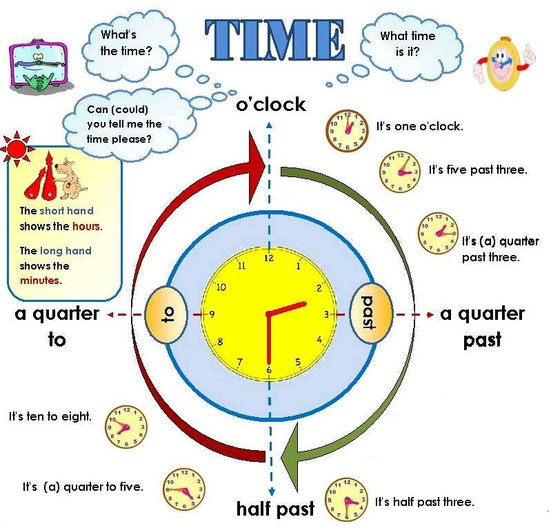
Ordinal Numbers
|
|
1st First |
|
|
2nd Second |
|
|
3rd Third |
|
|
4th Fourth |
|
|
5th Fifth |
|
|
6th Sixth |
|
|
7th Seventh |
|
|
8th Eighth |
|
|
9th Ninth |
|
|
10th Tenth |
|
|
11th Eleventh |
|
|
12th Twelfth |
|
|
13th Thirteenth |
|
|
14th Fourteenth |
|
|
15th Fifteenth |
|
|
16th Sixteenth |
|
|
17th Seventeenth |
|
|
18th Eighteenth |
|
|
19th Nineteenth |
|
|
20th Twentieth |
|
|
21st Twentyfirst |
|
|
22nd Twentysecond |
|
|
23rd Twentythird |
|
|
24th Twentyfourth |
|
|
25th Twentyfifth |
|
|
26th Twentysixth |
|
|
27th Twentyseventh |
|
|
28th Twentyeighth |
|
|
29th Twentyninth |
|
|
30th Thirtieth |
|
|
31st Thirtyfirst |
Prepositions of Movement
|
from |
desde |
|
to |
a |
|
up |
arriba |
|
down |
abajo |
|
along |
a lo largo |
|
across |
a través |
Prepositions of Time
|
on |
on Monday |
el lunes |
|
in |
in the morning/ afternoon/ evening |
por la mañana ... |
|
at |
at the weekend , at night |
el fin de semana, por la noche |
Prepositions of Place
|
near |
cerca |
|
in front of |
delante de |
|
behind |
detrás |
|
opposite |
enfrente |
|
in |
en |
|
under |
debajo |
|
on |
sobre |
|
between |
entre |
|
next to |
al lado de |
|
on the left |
a la izquierda |
|
on the right |
a la derecha |
Grammar
Present Continuous
Sujeto + Verbo TO BE + Gerundio de cualquier verbo
|
|||
|
AFIRMATIVA |
INTERROGATIVA |
NEGATIVA |
|
|
I am eating You are eating He is eating She is eating It is eating We are eating You are eating They are eating |
Am I eating? Are you eating? Is he eating? Is she eating? Is it eating? Are we eating? Are you eating? Are they eating? |
I´m not eating You aren´t eating He isn´t eating She isn´t eating It isn´t eating We aren´t eating You aren´t eating They aren´t eating |
|
|
acción que se realiza en el momento de hablar. AHORA EN ESTOS MOMENTOS: |
|||
|
I am working She is wearing a hat They are playing football I´m not watching TV |
Yo estoy trabajando Ella lleva puesto un sombrero Ellos estan jugando al football No estoy mirando la television |
||
Can
|
Affirmative |
|
I can Yo sé / Yo puedo you can he can she can it can we can you can they can |
|
Negative |
|
I can't ..............= I cannot = Yo no sé/ Yo no puedo you can't he can't she can't it can't we can't you can't they can't |
|
Interrogative |
|
can I?...............= ¿Sé yo? / ¿Puedo yo? can you? can he? can she? can it? can we? can you? can they? |
Past of the verb TO BE
AFFIRMATIVE
I was : yo era / yo estaba / yo estuve
you were
he was
she was
it was
we were
you were
they were
NEGATIVE
I wasn´t : yo no era / yo no estaba / yo no estuve
you weren´t
he wasn´t
she wasn´t
it wasn´t
we weren´t
you weren´t
they weren´t
INTERROGATIVE
was I ? : ¿era yo? / ¿estaba yo? / ¿estuve yo?
were you ?
was he ?
was she ?
was it ?
were we ?
were you ?
were they ?
